

Hey there! As a supplier of Hirschmann MAR1020 switches, I often get asked about the spanning tree protocol support of these devices. So, I thought I'd take a few minutes to break it down for you.
First off, let's talk about what the spanning tree protocol (STP) is. In a nutshell, STP is a network protocol that prevents loops in Ethernet networks. When you have multiple switches connected in a network, there's a risk of creating loops, which can cause broadcast storms and other network issues. STP helps to eliminate these loops by creating a logical tree structure in the network, where only one path between any two network nodes is active at any given time.
Now, let's get into the specifics of the Hirschmann MAR1020's STP support. The MAR1020 supports several different versions of the spanning tree protocol, including the original IEEE 802.1D STP, the Rapid Spanning Tree Protocol (RSTP, IEEE 802.1w), and the Multiple Spanning Tree Protocol (MSTP, IEEE 802.1s).
IEEE 802.1D STP
The original STP, defined in IEEE 802.1D, is the most basic form of the spanning tree protocol. It uses a slow convergence process to determine the active paths in the network. When a change occurs in the network, such as a link going down or a new switch being added, it can take up to 50 seconds for the network to converge and re - establish a loop - free topology. While this protocol is reliable, its slow convergence time can be a drawback in modern networks where quick recovery is essential.
Rapid Spanning Tree Protocol (RSTP)
RSTP, defined in IEEE 802.1w, is an improvement over the original STP. It significantly reduces the convergence time, often achieving convergence in less than a second. RSTP uses a more proactive approach to detecting and reacting to network changes. It has different port states and transition mechanisms that allow it to quickly adapt to new network topologies. This makes it a great choice for networks where downtime needs to be minimized, such as in industrial or enterprise environments.
Multiple Spanning Tree Protocol (MSTP)
MSTP, defined in IEEE 802.1s, is an even more advanced version of the spanning tree protocol. It allows multiple spanning trees to co - exist in a single network, which is useful for load balancing and providing different levels of service for different VLANs. With MSTP, you can group VLANs into instances and have a separate spanning tree for each instance. This gives you more flexibility in managing your network and optimizing its performance.
One of the great things about the Hirschmann MAR1020 is that it allows you to choose the appropriate STP version based on your network requirements. Whether you're running a small, simple network or a large, complex enterprise network, the MAR1020 has the STP support you need.
In addition to these standard STP protocols, the Hirschmann MAR1020 also offers some advanced features related to spanning tree. For example, it has support for PortFast, which allows a port to immediately transition to the forwarding state when a device is connected. This is useful for ports that are connected to end - devices like computers or servers, as it reduces the time it takes for these devices to get network connectivity.
Another useful feature is BPDU Guard. BPDU (Bridge Protocol Data Unit) Guard is a security feature that protects the network from unauthorized switches. If a port with BPDU Guard enabled receives a BPDU, it will immediately shut down the port, preventing a potential loop from being introduced into the network.

Now, let's talk about some of the products that work well with the Hirschmann MAR1020 in a network with STP. The Hirschmann M - SFP - LX+/LC is a great choice for fiber - optic connections. These small form - factor pluggable (SFP) modules can be used with the MAR1020 to provide high - speed, long - distance connectivity. They are reliable and easy to install, making them a popular choice for industrial and enterprise networks.
The Hirschmann RS20 - 2400T1T1SDAEHH is another device that can be integrated with the MAR1020. It's a rugged industrial switch that also supports various spanning tree protocols. When used in conjunction with the MAR1020, it can help to expand your network and provide additional connectivity options.
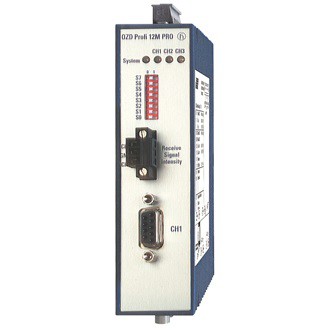
And if you're looking for a high - performance device for your network, the Hirschmann OZD Profi 12M G12 - 1300 PRO is a great option. It offers advanced features and high - speed connectivity, and it can work together with the MAR1020 to create a robust and reliable network infrastructure.
If you're interested in learning more about the Hirschmann MAR1020 and its spanning tree protocol support, or if you're looking to purchase these products for your network, I'd love to talk to you. Whether you're a small business owner looking to set up a simple network or an IT professional in charge of a large enterprise network, I can help you find the right solutions for your needs. Just reach out, and we can start a conversation about how the Hirschmann MAR1020 can fit into your network infrastructure.
References
- IEEE 802.1D - Standard for Local and Metropolitan Area Networks: Media Access Control (MAC) Bridges
- IEEE 802.1w - Rapid Reconfiguration of Spanning Trees
- IEEE 802.1s - Multiple Spanning Tree Protocol