

In the dynamic landscape of industrial networking, compliance with industry standards is not just a checkbox; it's a cornerstone of reliability, interoperability, and safety. As a trusted supplier of the RS20 Hirschmann, I often encounter questions regarding its alignment with industry benchmarks. This blog aims to delve deep into the subject, providing a comprehensive analysis of whether the RS20 Hirschmann truly meets the rigorous demands of industry standards.
Understanding Industry Standards in Industrial Networking
Before we assess the RS20 Hirschmann, it's crucial to understand the significance of industry standards in industrial networking. These standards are established by international bodies and industry associations to ensure that products are safe, reliable, and interoperable. They cover a wide range of aspects, including electrical safety, electromagnetic compatibility (EMC), performance, and environmental resilience.
One of the most well - known standards in the field is the International Electrotechnical Commission (IEC) standards. The IEC sets global standards for electrical, electronic, and related technologies. For industrial networking devices, IEC standards such as IEC 61000 - 4 series for EMC, IEC 60950 for electrical safety, and IEC 61850 for substation automation play a vital role.
Another important set of standards is from the Institute of Electrical and Electronics Engineers (IEEE). IEEE standards, like IEEE 802.3 for Ethernet, define the physical and data - link layer specifications for networking devices, ensuring seamless communication between different devices.
The RS20 Hirschmann: A Closer Look
The RS20 Hirschmann is a product that has been designed with industrial applications in mind. It offers a range of features that are tailored to the harsh environments and high - performance requirements of industrial settings.
Let's start with its electrical safety features. The RS20 Hirschmann is built to comply with relevant IEC standards for electrical safety. This means that it has proper insulation, grounding, and over - current protection mechanisms in place. These features not only protect the device itself from electrical failures but also ensure the safety of the operators and other connected equipment.
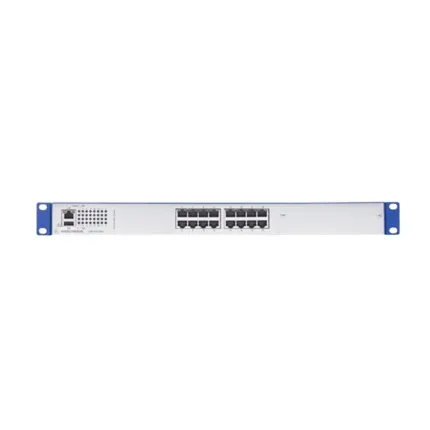

In terms of electromagnetic compatibility, the RS20 Hirschmann is engineered to minimize electromagnetic interference (EMI) and be immune to external EMI. It meets the requirements of the IEC 61000 - 4 series, which includes tests for electrostatic discharge (ESD), radiated and conducted electromagnetic fields, and electrical fast transient/burst immunity. This compliance is essential in industrial environments where there are numerous electrical devices operating in close proximity, and EMI can disrupt the normal operation of the network.
When it comes to performance, the RS20 Hirschmann is designed to support high - speed data transfer and low - latency communication. It adheres to the IEEE 802.3 Ethernet standards, which guarantee reliable and efficient data transmission. This allows for seamless integration with other Ethernet - based devices in the industrial network, enabling real - time data exchange and control.
Real - World Examples of Compliance
To further illustrate the compliance of the RS20 Hirschmann, let's consider some real - world scenarios. In a manufacturing plant, where there are a large number of automated machines and control systems, the RS20 Hirschmann can be used to connect these devices in a local area network. Thanks to its compliance with IEC and IEEE standards, it can operate reliably in the presence of electrical noise generated by motors, transformers, and other equipment.
In a power substation, the RS20 Hirschmann can be integrated into the substation automation system. Its compliance with IEC 61850 standards ensures that it can communicate effectively with other substation devices, such as protection relays and intelligent electronic devices (IEDs). This is crucial for the safe and efficient operation of the power grid.
Comparing with Other Hirschmann Products
Hirschmann offers a wide range of networking products, each designed to meet specific industrial needs. For example, the Hirschmann GRS1130 - 16T9SMMZ9HHSE2S is a high - performance switch that is suitable for large - scale industrial networks. It also complies with industry standards, but its features and capabilities are optimized for different applications compared to the RS20 Hirschmann.
The Hirschmann RS20 - 0400S2S2SDAEHH is another product in the RS20 series. It shares similar compliance characteristics with the RS20 Hirschmann, but it may have different port configurations or additional features depending on the specific requirements of the application.
The Hirschmann MACH104 - 20TX - FR - L3P is a Layer 3 switch that offers advanced routing capabilities. Like the RS20 Hirschmann, it meets industry standards for reliability, safety, and performance, but it is more suitable for complex network topologies.
Conclusion and Call to Action
In conclusion, the RS20 Hirschmann is fully compliant with industry standards in terms of electrical safety, electromagnetic compatibility, and performance. Its adherence to these standards makes it a reliable choice for a wide range of industrial applications, from manufacturing plants to power substations.
If you are in the market for a high - quality industrial networking device that meets the highest industry standards, the RS20 Hirschmann is an excellent option. Whether you are looking to upgrade your existing network or build a new one, our team of experts is ready to assist you. We can provide detailed technical information, product demonstrations, and support throughout the procurement process. Contact us to start a discussion about your specific requirements and how the RS20 Hirschmann can meet them.
References
- International Electrotechnical Commission (IEC) standards.
- Institute of Electrical and Electronics Engineers (IEEE) standards.
- Hirschmann product documentation.